This site contains affiliate links, which means I may earn a small commission If you click on a link and make a purchase, at no extra cost to you.
Have you ever looked around your house and thought, “This place really needs a deep clean”?
Then you start thinking about everything that needs to be done.
The floors need attention. The bathroom needs scrubbing. The kitchen has several jobs waiting. There are also those little areas you keep forgetting about.
Suddenly, deep cleaning feels like a project that could take the entire weekend.
It does not have to be that way.
You can give your home a proper deep clean without spending every free minute scrubbing and organizing. The secret is knowing where to start and what actually deserves your attention.
You also do not need to clean every room perfectly in one day.
If you have been discovering forgotten areas around your home, 21 Places in Your Home You’re Probably Forgetting to Clean can help you spot some of them.
A good deep cleaning session should leave your home feeling fresher without leaving you completely exhausted.
That means having a simple order to follow. It also means knowing when to move on instead of spending forty minutes cleaning one tiny corner.
In this post, we are going to make deep cleaning feel much more manageable.
You will learn how to break the work into sections, what to clean first, what can wait, and how to finish without feeling like you have spent your entire day cleaning.
Because honestly, your house deserves a good clean.
You deserve to have some time left to enjoy the rest of your day too.

Start With a Plan Before You Start Cleaning
The easiest way to spend all day deep cleaning is to start without a plan.
You walk into the kitchen and start wiping the counters. Then you notice the refrigerator needs attention. From there, you remember the pantry. Suddenly, you are sorting expired food instead of cleaning the room.
That kind of cleaning can take forever.
Before touching a cleaning product, take a few minutes to decide what you want to accomplish.
Walk through your home and look at each room. Notice the areas that need the most attention.
Do not make a list of every tiny task you could possibly do. That will only make the job feel bigger.
Choose the tasks that will make the biggest difference.

Decide What Needs Deep Cleaning
Some areas may only need a quick tidy.
Others may need proper scrubbing.
The kitchen might need a deep clean, while the bedroom only needs dusting and vacuuming.
Write down your priorities before you begin.
You can also use How to Clean Your House Room by Room Without Feeling Overwhelmed to help you break your home into manageable sections.
Once you know what you are doing, cleaning becomes much easier.
You are not constantly stopping to decide what comes next.
Give Yourself a Time Limit
A time limit can also keep you focused.
Choose how long you want to clean before taking a break.
Maybe you have two hours available. Perhaps you only have one afternoon.
Work with the time you actually have.
Do not plan a six hour cleaning session if you already know you will be exhausted after three hours.
A realistic plan will help you finish the important work without feeling like cleaning has taken over your entire day.

2. Gather Everything You Need First
There is nothing more frustrating than getting halfway through cleaning and realizing you are missing something.
You start looking for a cloth, then remember the vacuum needs charging. Next, you realize the bathroom cleaner is upstairs.
Before long, you are walking around the house more than you are actually cleaning.
Save yourself the trouble by gathering your supplies first.
You do not need every cleaning product in the store. A few reliable supplies can handle most of the work.
Grab your cleaning cloths, sponges, brushes, vacuum, broom, mop, and the cleaners you normally use.
Put everything somewhere central so you can reach it easily.
A cleaning caddy can be especially helpful if you are moving between rooms.

Keep Your Supplies Simple
Try not to make deep cleaning complicated by using a different product for every surface.
Use products that are appropriate for the materials you are cleaning. Always check the label when you are unsure.
If you prefer simpler household options, 19 Natural Cleaning Solutions Every Home Should Have has ideas worth exploring.
You can also keep a small supply of essentials rather than storing dozens of half used bottles.
That makes your cleaning cupboard easier to manage.

Protect Yourself While Cleaning
Deep cleaning usually means more dust, dirt, and cleaning products than your normal routine.
Open windows when appropriate to improve airflow.
Wear gloves if they make cleaning more comfortable for you.
Never mix cleaning products unless the instructions specifically say it is safe.
A little preparation can make the entire session smoother.
Once everything is within reach, you can focus on cleaning instead of constantly searching for supplies.
3. Declutter Before You Deep Clean
Deep cleaning becomes much harder when every surface is covered with stuff.
You cannot properly wipe a table when it is covered with mail, toys, chargers, cups, and random items.
That is why decluttering should come before serious cleaning.
You do not need to organize your entire home first.
Simply remove things that do not belong in the room.
Put dirty clothes in the laundry basket. Take dishes to the kitchen. Return books to their shelves. Gather rubbish and throw it away.
Once the surfaces are clear, cleaning becomes much faster.

Do Not Turn Decluttering Into a Whole Day Project
This is where people often get distracted.
You find an old box and suddenly start sorting through childhood memories.
That can wait.
Your goal right now is to clear enough space to clean properly.
Put questionable items in a basket and deal with them later.
If you are preparing your home for the holiday season, 17 Things to Declutter Before the Holiday Season can help you decide what deserves to stay.
A little decluttering can make deep cleaning feel completely different.
Instead of working around clutter, you can actually reach the surfaces that need cleaning.

4. Work From Top to Bottom
One of the easiest ways to make deep cleaning harder is cleaning in the wrong order.
Imagine vacuuming the floor, then dusting the ceiling fan afterward.
All that dust will end up back on your freshly cleaned floor.
Instead, work from the highest surfaces down to the lowest ones.
Start with ceiling fans, light fixtures, shelves, and the tops of cabinets. Then move to tables, counters, furniture, and finally the floors.
This simple order saves you from doing the same job twice.

Start With the Dustiest Areas
Look around the room before you begin.
Which surfaces have visible dust? Which corners have been ignored for a while?
Start there.
Use a suitable duster or microfiber cloth to collect the dust rather than simply pushing it around.
Remember to check the spaces that are easy to overlook. You may find dust sitting behind furniture, along door frames, or underneath things you rarely move.
If you want a reminder of those forgotten areas, 21 Places in Your Home You’re Probably Forgetting to Clean is useful to keep nearby.
Once the higher surfaces are done, work your way down.
That way, anything that falls gets cleaned up later when you vacuum or sweep.
5. Deep Clean One Room at a Time
Trying to deep clean the entire house at once can make the job feel endless.
You clean one room halfway, notice something in another room, then move there.
Before long, you have five unfinished rooms and no idea where to continue.
Instead, finish one room before moving to the next.
Start with the room that needs the most attention. Complete the major cleaning tasks there, then move on.
This gives you a visible sense of progress.

Give Each Room a Simple Order
For each room, start by removing clutter.
Next, dust the higher surfaces.
Then clean furniture, windows, doors, and other surfaces.
Finish with the floor.
You can adjust the order when the room requires something different.
The point is to have a basic pattern so you are not constantly deciding what to do next.
If one room feels particularly overwhelming, How to Do a Whole-House Reset in One Weekend can give you another way to break larger cleaning jobs into manageable sections.
You do not have to finish the entire house before you allow yourself to feel productive.
One completely cleaned room is still progress.

6. Give the Kitchen Extra Attention
The kitchen usually deserves more time during a deep clean because it deals with food, grease, spills, and everyday traffic.
Start by clearing the counters.
Put away appliances and remove anything that does not belong there.
Then wipe the counters, cabinet fronts, backsplash, and other frequently used surfaces.
Move on to the sink and faucet.
Check the stove for grease and dried spills. Clean the areas around it too because cooking mess rarely stays in one spot.
Do Not Forget the Hidden Kitchen Spots
This is where deep cleaning differs from everyday cleaning.
Look under small appliances. Check cabinet handles and wipe the areas around them.
Clean the inside of drawers that have collected crumbs.
Check the top of the refrigerator if you have not cleaned it recently.
You do not need to clean every cabinet interior on the same day.
Focus on the areas that actually need attention.
If your kitchen has several jobs waiting, How to Use Vinegar for Everyday Household Cleaning may give you some simple cleaning ideas for suitable surfaces.
Just check the material and cleaning instructions first.
A little extra attention in the kitchen can make the whole home feel cleaner.
7. Give the Bathroom a Proper Scrub
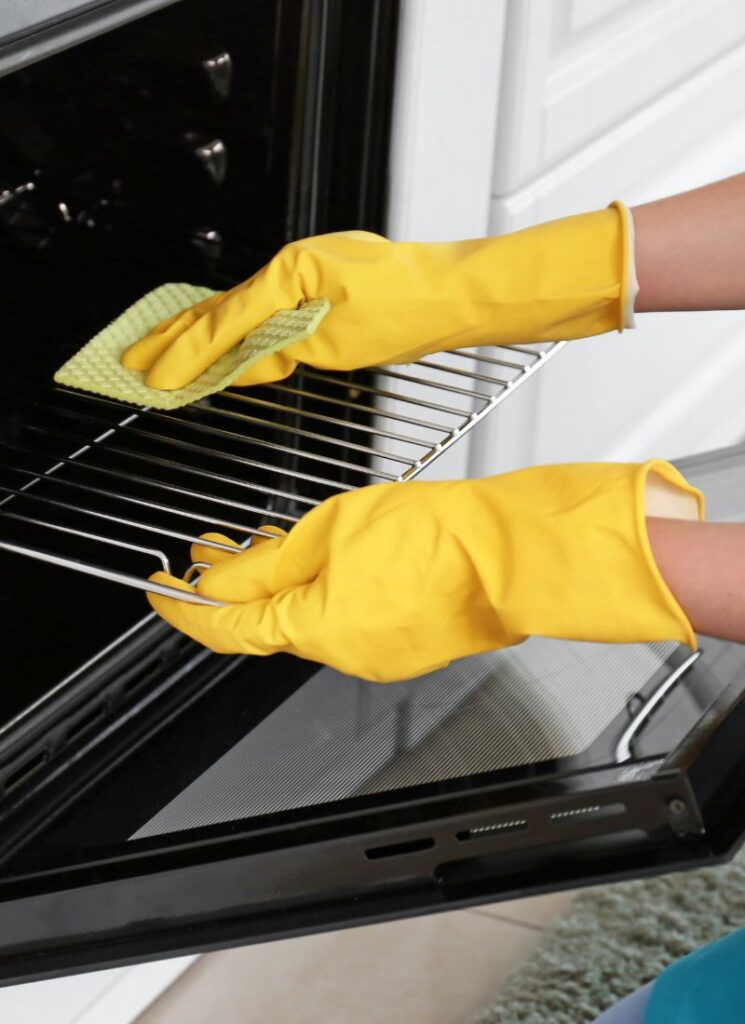
The bathroom is one room where a deep clean can make a huge difference. It is also a room that can become dirty quickly, especially when several people use it every day.
Start by removing everything from the counters and shower area. Put toiletries back where they belong, then throw away empty bottles and products nobody uses anymore.
Once the surfaces are clear, clean the mirror, sink, faucet, counters, and cabinet fronts. Pay attention to the edges around the sink because toothpaste, soap, and water can collect there.
Move on to the toilet after the other surfaces are finished. Clean the seat, lid, outside, base, and the floor around it. Check behind the toilet too if you can reach the area safely.
The shower and bathtub usually need more attention during a deep clean. Remove soap residue from the walls, doors, fixtures, and corners. Always check the care instructions before using a new cleaner on a surface.
If you want to avoid habits that create more cleaning work, 21 Cleaning Mistakes That Are Making Your House Dirtier is worth reading.
Once the higher surfaces are clean, sweep or vacuum the floor. Finish by mopping with a product that is suitable for your flooring.
You should notice the difference without spending hours scrubbing every tiny spot.
8. Give Your Bedrooms a Proper Reset
Bedrooms usually do not need heavy scrubbing, but they can collect plenty of dust and clutter.
Start with the bed because it takes up so much visual space. Strip the bedding if it needs washing, then make the bed with fresh sheets when you are ready.
Next, clear the nightstands and dressers. Put away anything that has been left there during the week.
Take dirty clothes to the laundry basket. Return books, cups, chargers, and other random items to their proper places.
Once the room is clear, dust the furniture.
Move small objects instead of simply wiping around them. Pay attention to lamps, shelves, picture frames, and the tops of dressers.
Check the Hidden Bedroom Areas
Now look underneath the bed and behind smaller furniture.
These areas can collect dust, hair, and forgotten items for months.
You do not have to move heavy furniture just to clean behind it. Work with the space you can safely reach.
If you find clothes or belongings you no longer use, set them aside rather than putting everything straight back.
You can deal with those items later using 17 Things to Declutter Before the Holiday Season.
If you want your freshly cleaned bedroom to smell pleasant without strong artificial scents, How to Make Your Home Smell Fresh All Day Without Artificial Fragrance has some simple ideas.
Once you finish dusting, vacuum the floor carefully.
There is no need to keep going once the room feels clean and comfortable.

9. Clean the Floors After Everything Else
There is a reason floors should usually be one of the last things you clean.
Dust falls.
Crumbs fall.
Tiny bits of dirt will end up on the floor while you clean furniture and other surfaces.
Cleaning the floor first simply means you may have to do it again later.
Start by picking up everything that does not belong on the floor. Put away shoes, toys, clothes, bags, and anything else that has been left around.
Then vacuum or sweep thoroughly.
Pay attention to corners and the areas along the walls. Dust tends to collect there because those spots are easy to miss during everyday cleaning.
Move lightweight furniture when you can do so safely.

Finish With the Right Floor Care
Once the loose dirt is gone, mop the floor if it needs it.
Use a cleaning method that suits the type of flooring you have. Some floors require special products or very little water.
If you are deep cleaning because the whole house feels overwhelming, you do not have to finish every room in one day.
How to Clean Your House Room by Room Without Feeling Overwhelmed can help you break the work into smaller sections.
When you have very little time, 15 Things to Clean When You Only Have 30 Minutes can help you focus on the jobs that make the biggest difference.
The point of deep cleaning is not to exhaust yourself.
It is to make your home feel noticeably cleaner while still leaving you with enough energy to enjoy the rest of your day.
Deep cleaning your house does not have to become an all day event.
You do not need to scrub every corner until you are completely exhausted. A good deep clean is really about working smarter and knowing where your time matters most.
Start with a simple plan. Clear the clutter before you clean, gather your supplies, then work from the top down.
Move through one room at a time instead of jumping between unfinished tasks.
Give extra attention to places that need it most, especially the kitchen and bathroom. Save the floors for last so you do not end up cleaning them twice.
Most importantly, give yourself permission to stop.
Your house does not need to look like nobody lives there. It needs to feel clean, comfortable, and manageable for the people who actually live in it.
If you make deep cleaning part of your regular routine, the job becomes much easier over time. You will also spend less time dealing with heavy buildup because you are catching it earlier.
So the next time your home needs a proper reset, do not look at the entire house and panic.
Pick a room.
Choose your priorities.
Set a reasonable amount of time.
Then get started.
You might be surprised by how much you can accomplish without giving up your entire day to cleaning.